

2026/04 10 - Unique Applications of LS Instruments | Native Sample Analysis
Date: 15.4.2026
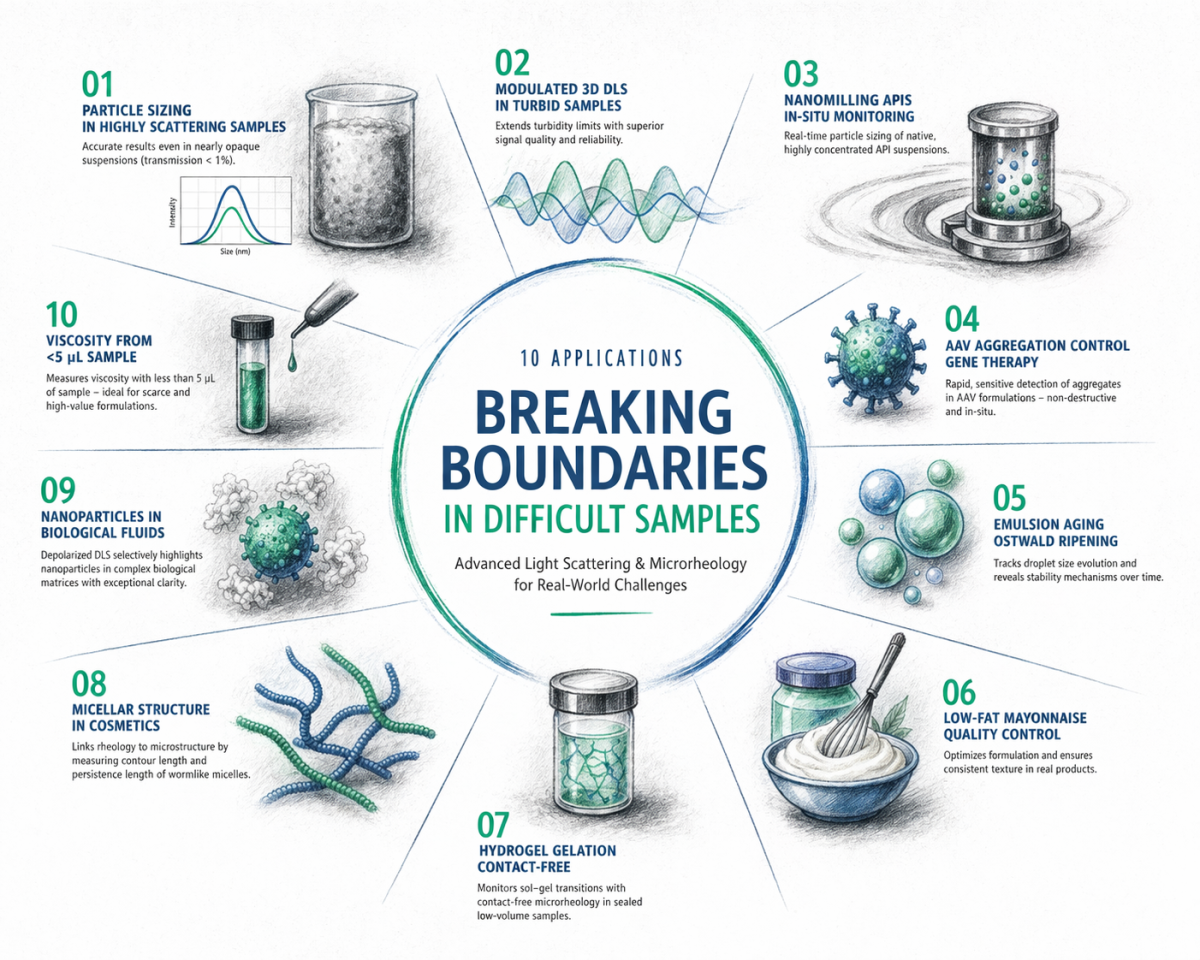
LS Instruments has a genuinely differentiated position in native-sample analytics. Its advanced light scattering technologies enable scientists and formulation teams to characterize particles, viscosity, gelation, and microstructure directly in turbid, concentrated, complex, or sealed samples, without forcing dilution, extensive sample preparation, or mechanical disturbance.
This capability is particularly valuable for modern formulation development, where product performance, stability, and quality are often determined by subtle changes in microstructure and viscoelastic behavior. By supporting formulation characterization, stability assessment, gelation monitoring, and product development in native conditions, LS Instruments helps researchers generate more relevant data from real-world samples and accelerate the path from material understanding to better products.
10 Applications That Show Why LS Instruments Offers a Truly Differentiated Solution
At LS Instruments, innovation is not about measuring more of the same. It is about enabling scientists and formulation teams to measure what is often hardest to characterize: native, concentrated, turbid, fragile, sealed, or physiologically complex samples. Across its applications library, LS Instruments repeatedly shows how advanced light scattering and microrheology can generate actionable insight where conventional DLS or classical bulk rheology often runs into dilution requirements, sample perturbation, limited sensitivity, or impractical sample-volume demands.
Below are ten standout applications that best illustrate this unique positioning.
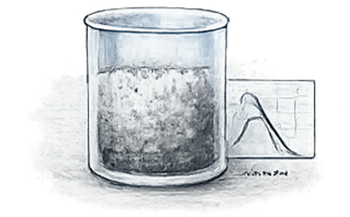 1. Measuring particle size in highly scattering samples
One of the clearest examples of LS Instruments’ differentiation is the ability to size particles in highly scattering and nearly opaque samples. The application note shows how 3D cross-correlation DLS suppresses multiple scattering and enables robust particle sizing even in samples with optical transmission below 1%—a strong answer to one of the biggest limits of conventional DLS.
Read the application
 2. Extending turbidity limits with Modulated 3D DLS
LS Instruments goes a step further with Modulated 3D Cross-Correlation DLS, designed for even stronger performance in concentrated and turbid systems. The note highlights how the method improves signal integrity and yields a much stronger correlation intercept than standard 3D cross-correlation, bringing users closer to high-quality sizing data in samples that would normally require dilution.
Read the application
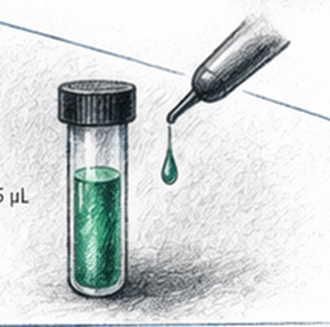 3. Measuring viscosity from less than 5 µL
For biopharma and other sample-limited workflows, LS Instruments addresses a major bottleneck: viscosity measurement when only tiny amounts of formulation are available. In this application, 3D DLS microviscometry is used to measure viscosity with sample volumes below 5 µL, while also handling very turbid samples without dilution when combined with Modulated 3D technology.
Read the application
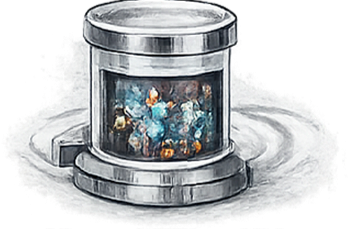 4. Monitoring nanomilling in native, highly concentrated API suspensions
In pharmaceutical process development, particle sizing under real process conditions is critical. LS Instruments shows that native, extremely turbid API suspensions can be measured directly during nanomilling, with examples including Naproxen at 79 nm and Fenofibrate at 173 nm, using Modulated 3D DLS. This is highly relevant for process control, yield optimization, and formulation robustness.
Read the application
 5. Detecting AAV aggregation in gene therapy formulations
AAV-based therapeutics require tight control over aggregation and stability. LS Instruments positions DLS as a rapid, sensitive, in-situ tool for evaluating AAV particle size distributions and detecting aggregates, while noting that established alternatives such as AUC, TEM, or SEC can be more time-consuming, destructive, and low-throughput. This makes the application especially relevant for viral vector development and QC workflows.
Read the application
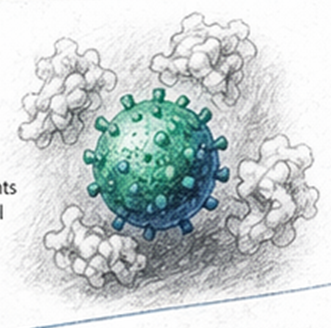 6. Characterizing nanoparticles in physiological and biological fluids
This is one of the most compelling “world should know” examples in the LS library. The linked publication shows how depolarized dynamic light scattering can suppress unwanted matrix signals in complex biological media and physiological fluids, yielding an unprecedented signal-to-noise ratio in favor of nanoparticles and nanoparticle–biomolecule corona complexes. It is a strong demonstration of selectivity in environments where conventional scattering methods struggle.
Read the application
 7. Following hydrogel gelation without touching the sample
Hydrogels are often difficult to characterize comprehensively with bulk rheology alone. LS Instruments shows how DWS RheoLab complements bulk rheology by delivering contact-free microrheology over an extended frequency range of about 0.1 rad/s to 1M rad/s, while enabling repeated, non-destructive measurements on small sealed samples. For hydrogel developers, this is a highly differentiated capability.
Read the application
 8. Tracking emulsion aging and Ostwald ripening in real time
Emulsion stability is a major challenge in food, personal care, and pharma. In this application, LS Instruments uses DWS to monitor the time evolution of droplet size and identify diffusion-controlled Ostwald ripening as the dominant aging mechanism, with measurements performed every five minutes while the sample remains in the instrument. This is a strong example of time-resolved, non-invasive stability analysis.
Read the application
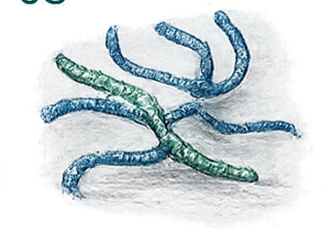 9. Linking cosmetic formulation performance to micellar microstructure
For personal care formulators, the value of rheology increases significantly when it can be tied to real structural insight. LS Instruments shows how DWS microrheology can access the high-frequency response of complex fluids and extract key wormlike micelle parameters such as persistence length and contour length. That moves the discussion from simple viscosity numbers to true formulation understanding.
Read the application
 10. Improving formulation and quality control of low-fat mayonnaise
Sometimes the best proof of value is an application everyone immediately understands. LS Instruments demonstrates how DWS RheoLab can support the formulation and quality control of low-fat mayonnaise, while emphasizing that DWS is especially well suited to turbid, white samples such as creams and dairy-type products. It is a simple but powerful illustration of how advanced microrheology becomes directly useful in real industrial products.
Read the application
Why this matters
Taken together, these applications define a clear and distinctive market message: LS Instruments enables characterization of difficult real-world samples in their native state. Whether the challenge is turbidity, concentration, low sample volume, physiological complexity, sealed-vial monitoring, or contact-free rheology, the application library shows a consistent pattern of solving problems that conventional methods often handle only imperfectly.