

Lipid Nanoparticle Characterization – From R&D Challenges to Actionable Insight
Unraveling the Secrets of Lipid Nanoparticles (LNPs) with 3D Dynamic Light Scattering (3D-DLS)
Welcome to our comprehensive resource on lipid nanoparticle characterization using advanced light scattering with the LS Spectrometer II. Whether you're working with LNPs, nanoemulsions, or other nanoparticle systems, this approach enables you to rapidly screen formulations, detect early instability, and gain deep insight into particle size and microstructure—helping you reduce trial-and-error, accelerate development, and make confident, data-driven decisions in your R&D workflow.
As an R&D scientist working with lipid nanoparticles (LNPs), you are constantly balancing speed, reliability, and depth of understanding.
You need to:
- Screen multiple formulations quickly
- Understand why some batches fail
- Predict stability early
- Work with real samples—not idealized ones
Yet, conventional analytical tools often leave you with:
- Incomplete or misleading data
- Time-consuming workflows
- Limited insight into microstructure and dynamics
Lipid Nanoparticles Development challenges
Lipid nanoparticle systems are highly sensitive. Small variations in formulation or processing can significantly impact:
- Particle size and polydispersity
- Structural integrity
- Stability over time
- Biological performance
Typical questions you face
- “Why does this formulation suddenly aggregate?”
- “Why are results not reproducible between batches?”
- “What causes long-term instability?”
- “Which parameter is actually driving performance?”
Without the right analytical tools, these questions lead to:
- Iterative guesswork
- Long development cycles
- Increased risk of late-stage failure
Why Conventional Methods Fall Short
Standard DLS and related techniques:
- Struggle with highly concentrated or turbid samples
- Require dilution that alters the system
- Provide limited insight into dynamic processes
👉 Result: You measure a number, but not the underlying behavior.
A New Approach to LNP Characterization
This resource focuses on lipid nanoparticle characterization using advanced light scattering techniques with the LS Spectrometer, enabling you to move beyond simple size measurements toward true microstructural understanding.
Whether you are working with:
- Lipid nanoparticles (LNPs)
- Nanoemulsions
- Polymeric or hybrid nanoparticle systems
the key is not only to measure particle size and distribution, but to:
👉 Access microstructural dynamics
👉 Detect early instability mechanisms
👉 Characterize samples in real formulation conditions
What You Gain as an R&D Scientist
With this approach, you can:
-
Accelerate formulation development
Rapid feedback enables faster iteration and screening -
Understand behavior—not just results
Link particle size, structure, and dynamics to performance -
Work with real samples
Measure concentrated and turbid systems without dilution -
Reduce uncertainty and failed experiments
Detect aggregation and instability at an early stage
From Measurement to Control
Dynamic Light Scattering (DLS), when extended with advanced 3D capabilities, becomes more than a sizing tool—it becomes a decision-making instrument.
👉 You move from measuring particles → understanding systems
👉 From trial-and-error → data-driven optimization
Application example: Vaccine Adjuvant Addavax
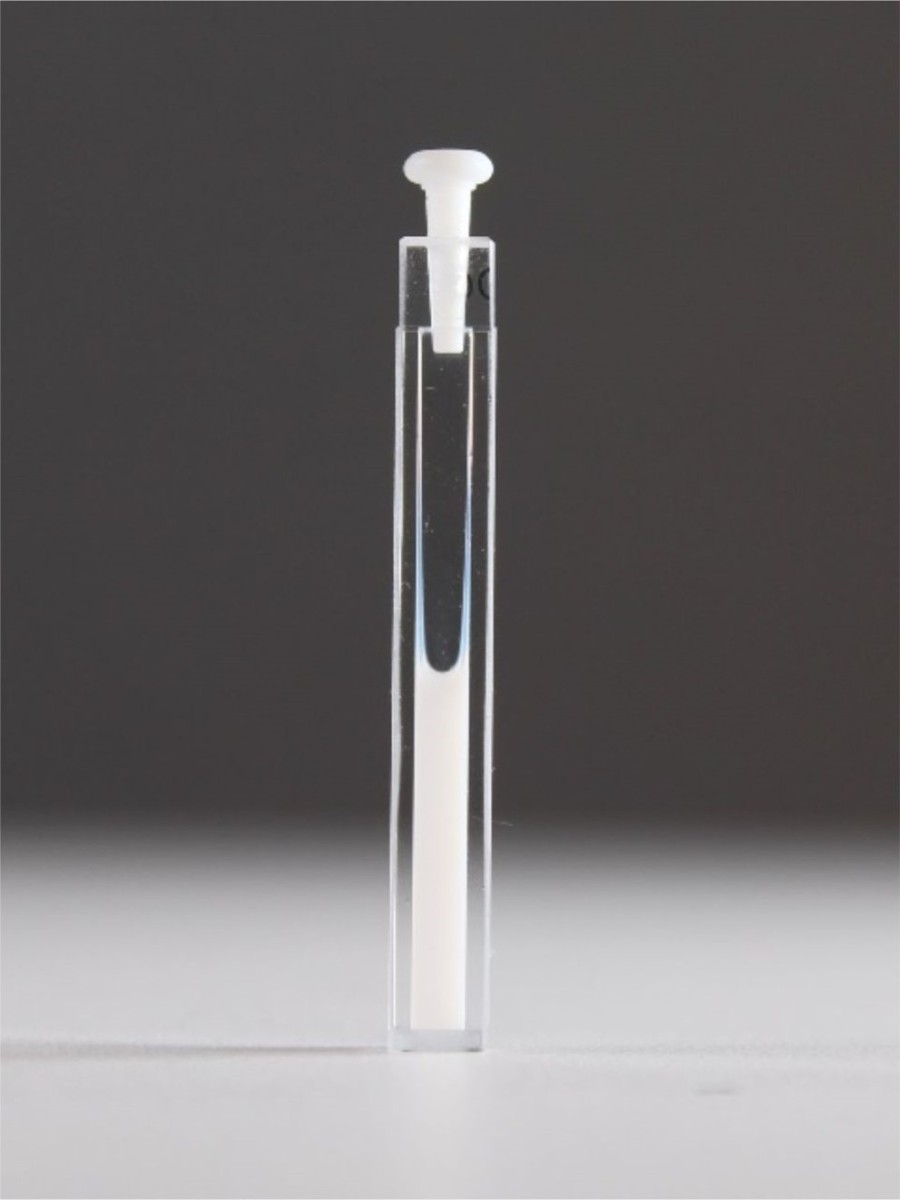
Understanding the impact of lipid nanoparticle size on immunogenicity represents an important step for enabling the rapid development of novel vaccines against known or emergent diseases.
Read in this application how the advanced DLS from LS Instruments enables the reliable measurement of particle size in a nanoemulsion at product concentration and high turbidity.
Featured instrument:LS Spectrometer II, 3D

Multi-angle goniometer-based light scattering instrument for DLS and SLS
The LS SpectrometerTM II is a goniometer-based variable-angle light scattering instrument for static- (SLS) and dynamic light scattering (DLS). The LS SpectrometerTM II allows for the most comprehensive nanoparticle characterization and can be further upgraded with various options, such as Modulated 3D technology for the measurement of turbid samples.